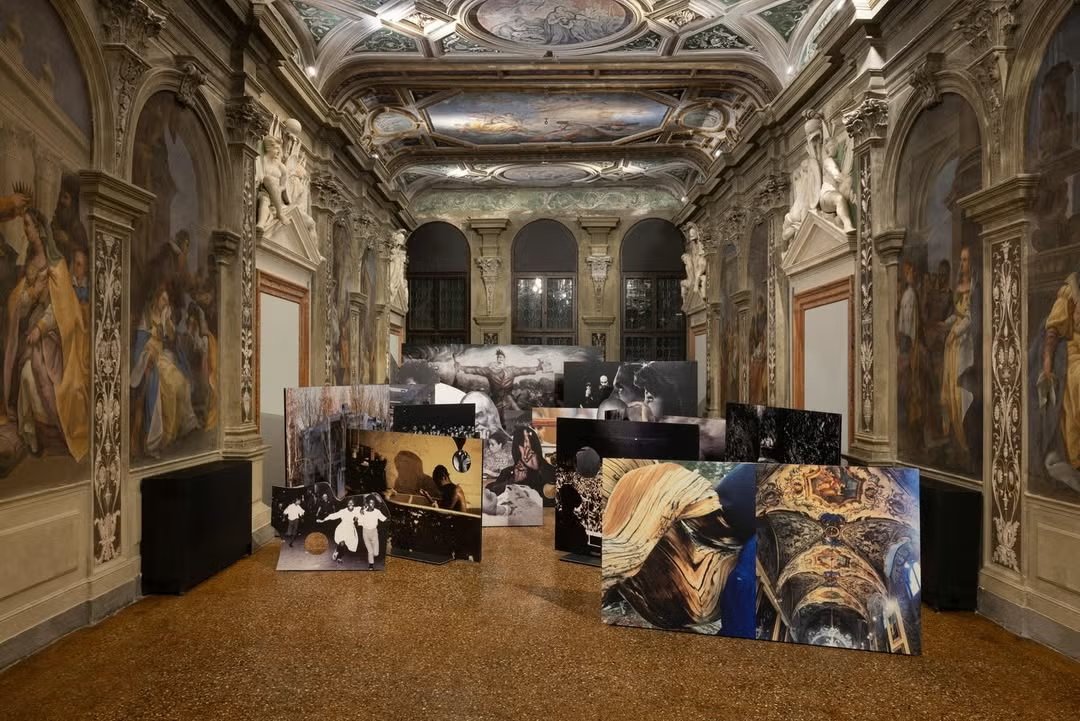
The Venice Biennale is an international art biennial exhibition held in Venice, Italy. Often described as "the Olympics of the art world", participation in the Biennale is a prestigious event for contemporary artists. The festival has become a constellation of shows: a central exhibition curated by that year's artistic director, national pavilions hosted by individual nations, and independent exhibitions throughout Venice. The Biennale parent organization also hosts regular festivals in other arts: architecture, dance, film, music, and theater.
Outside of the central, international exhibition, individual nations produce their own shows, known as pavilions, as their national representation. Nations that own their pavilion buildings, such as the 30 housed on the Giardini, are responsible for their own upkeep and construction costs as well. Nations without dedicated buildings create pavilions in the Venice Arsenale and palazzos throughout the city.
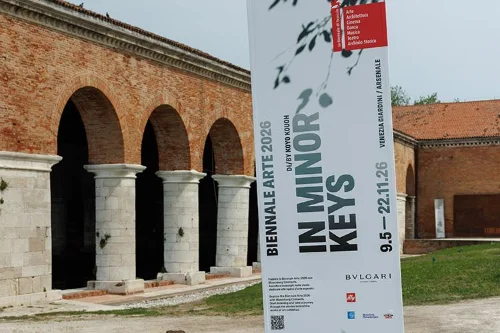
The 61st International Art Exhibition of La Biennale di Venezia – titled In Minor Keys by Koyo Kouoh – runs from Saturday 9 May to Sunday 22 November 2026 at the Giardini and Arsenale venues, in various locations across Venice and at Forte Marghera.
With the full support of Koyo Kouoh’s family, La Biennale di Venezia decided to carry out her Exhibition. It will do so by following the project just as she conceived and defined it, with the purpose of preserving, enhancing and disseminating her ideas and the work she pursued.
The 61st Venice Biennale is a global international contemporary art exhibition that is being held in 2026 with participants from 99 countries with public exhibition days running from May 9 until November 22 with preview days starting May 6.
The declared theme for the main curatorial exhibition is "In Minor Keys," which was selected by Koyo Kouoh, chief curator of the Zeitz Museum of Contemporary Art Africa. However, Kouoh died a year before the opening, leaving her collaborators to fill out her vision.
This edition of the Venice Biennale has been marred by several controversies, including the resignation of the jury days before the festival was scheduled to start, an initial jury announcement that it would not give awards to countries whose leaders were being indicted for war crimes, and the absence of the Italian minister of culture for the first time in the biennale's history.